

Early stage companies naturally gravitate to budgeting as a way to control their spending and measure performance against their plan. They are less likely to see the need for an economic or financial model that is forward-looking in predicting how the company’s will respond to changes in circumstances and assumptions. We asked our partners to explain how a financial or economic model of the business differs from a budget or forecast.
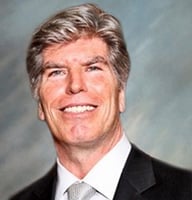
Tony Cord brings to Newport an accomplished background as a practice leader, growth driver, board member and advisor to mid-market, emerging growth and PE sponsors. He leads Newport's Mid-Atlantic Practice.
"I think of budgets and models as similar. You can test various assumptions and inputs and see the possible results and variances. This process makes you a better decision maker who is armed with more insight."

Lynn has had a diverse career as an executive and advisor. As President and Founder of Lednicky Enterprises, he has provided expert advice to the energy, utility, and infrastructure sectors. His engagements have included M&A support, operational and financial restructuring, renewable energy, project development and financing and advising on production and use of natural gas as a domestic transportation fuel.
"A financial model extends several years into the future and incorporates multiple variables that can easily be manipulated. To be useful, a financial model should not just cut and paste one month’s numbers to the next."

Bill was most recently CFO and COO of Avion Systems, a provider of staffing services to the telecommunications and technology sectors in Atlanta. In that role Bill was responsible for staffing, project management, human resources and finance functions, helping the company develop controls and forecasting processes.
"In a financial model changes to the business environment can be reflected in the tool in a dynamic way to measure their impact on the profitability of the business. A budget or forecast is more static andmeasures the business at a point in time."


Doug Payne is an experienced executive leader and Board member with a successful track record of building growing profitable companies. At Tatum he was a Managing Partner, Regional Practice Leader and member of Tatum's Board of Directors. He led three different practices at Tatum and retired from the firm running the executive services practice in Tatum's largest office (Dallas).
"A model is dynamic and can readily be used to test alternative strategic or operating scenarios. Budgets serve different purposes. In small, unsophisticated companies they are often prepared because the bank asks for them rather than for the benefit of the leadership team in understanding their business financially."

Mark Rosenman has deep experience developing processes, systems and content to create value from intellectual capital. Serving as the Chief Knowledge Officer at Tatum, he successfully drove strategies to develop, capture, share and deploy the knowledge and experience of the firm's professionals.
"A budget or forecast is likely to focus on determining what the company can afford to spend or on estimating cash flow. A financial model is a deeper look at the underlying relationships that determine company outcomes. For example, what kind of increase in leads is required to produce an increase in sales? What will be the net impact of a new channel relationship on gross profits?"

John has delivered top- and bottom-line results running a wide range of companies and dealing with challenges like acquisitions, lean manufacturing, supply chain optimization/low cost sourcing, new product development and brand and channel management.
"The financial model will typically include inputs from the environment in which the business operates. This allows it to consider significant factors that originate in markets and regulatory agencies in crafting a realistic outlook for the business. In some sophisticated businesses the financial model may include a multiple regression analysis that considers key items that influence business performance."

Eran has diverse experience in executive management, venture capital, private equity and M&A, including turnaround, restructuring and special situations transactions. He was the Chairman of the Board and has been CEO of PowerSines Ltd, an international energy efficiency company. In this role Eran led a private equity transaction involving the purchase of a family-owned company in the power/cleantech sector.
"A financial model represents the company’s method or system. Early in a company’s life the variables are yet to be proven at scale and validated by the market, customers and suppliers. They are not yet fully predictive. A budget or forecast should be more specific and accurate. It should be rationalized through empirical research and analysis to the point that it starts to achieve predictability."
Is your business ready to make an economic model? Find out in this FREE guide " 12 Steps to Build and Economic Model."

