

 Every once in a while I am reminded of the old African proverb: “Every morning in Africa, a gazelle wakes up. It knows it must run faster than the fastest lion or it will be killed. Every morning a lion wakes up, it knows that it must outrun the slowest gazelle or it will starve to death. It doesn’t matter whether you are the lion or the gazelle, when the sun comes up you had better be running.”
The proverb comes to mind as my partners in Newport Board Group and I get new insights every day as to how dynamic and hyper-competitive the middle market economy has become. Tools like the cloud; social media marketing; powerful new business models and the ready availability of capital to fund promising companies are empowering entrepreneurs to scale and globalize their companies faster than ever. Both gazelles and lions can—and must--run faster than ever.
What does this mean for “lifestyle” business owners? These are often companies that have decided to “stay small,” rather than take on the risks of trying to grow rapidly to scale. But these companies still face the imperative to “grow or die.” This is also evidenced by the 90% of emerging growth companies that don’t make it through No Man’s Land to become economy heroes. Scaling a business is fraught with challenges that need to be navigated. Paradoxically perhaps, learning to fail is one of these challenges.
Famous Failures
What do Xerox, McDonald’s, Apple, and Pfizer have in common? All of these iconic companies learned a lot from their failures, which in turn led to huge successes. Right after World War II, the Xerox “Ox Box” Model A failed when it was first introduced. But when the company later launched the fully automated Model 914 ten years later, it transformed modern office work.
McDonalds Hula Burger (made with pineapple) failed in 1962 as a Friday meatless alternative meal--but that led to the Filet-O-Fish sandwich a year later, which then became the McDonalds classic. Apple’s Lisa launched in 1983 was the first commercial personal computer featuring a graphical user interface (GUI) in a machine aimed at business users. But it didn’t sell because it was sluggish and expensive. However, this helped to inspire Apple’s famously user-friendly product line, from the crisp Macintosh interface of the iMac to the sleek and simple iPod, iPhone, and iPad.
Pfizer first tested Sildenafil (Viagra) on humans in 1991 but it didn’t prove effective for its initial indication—angina or chest pain. After patients reported side effects, Pfizer began testing the compound for erectile dysfunction and in 1998 Viagra became the first drug to treat that condition, a blockbuster drug that has been a household name ever since.
The Lessons From Failure
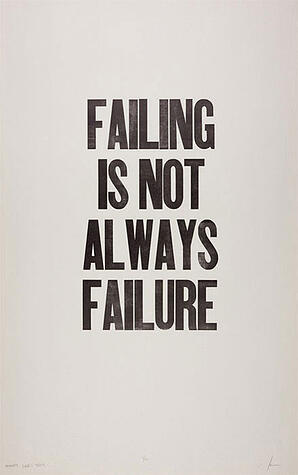
These lessons about how famous companies used failure as a springboard are particularly applicable to emerging growth and middle market companies. The difference between average people (including CEOs and business owners) and high achieving people is their perception of and their response to failure. High performers don’t take failure personally. They recognize that failure is not a single event. It is part of a process of learning, reflection and course correction.
In the next part of this article, I will explain what I think is the right way for entrepreneurs to respond to failure.

About the Author
Bill’s career has focused on emerging growth companies that need to get past No Man’s Land and private equity firms that invest in these firms. He also has extensive experience with his own family's business and several others where he has served as an interim executive and advisor. Contact or learn more about Bill here. Connect with Bill on LinkedIn

Photo credit: iheartinspiration.com

