 Almost six months into 2014, the current state of the U.S. venture capital industry is robust. Forbes reports that 2013 was the strongest year since 2007 for the VC industry, thanks in large part to a reviving IPO market for VC-backed IPOs in 2013 (82 such IPOs raised $11.2 billion according to the National Venture Capital Association.).
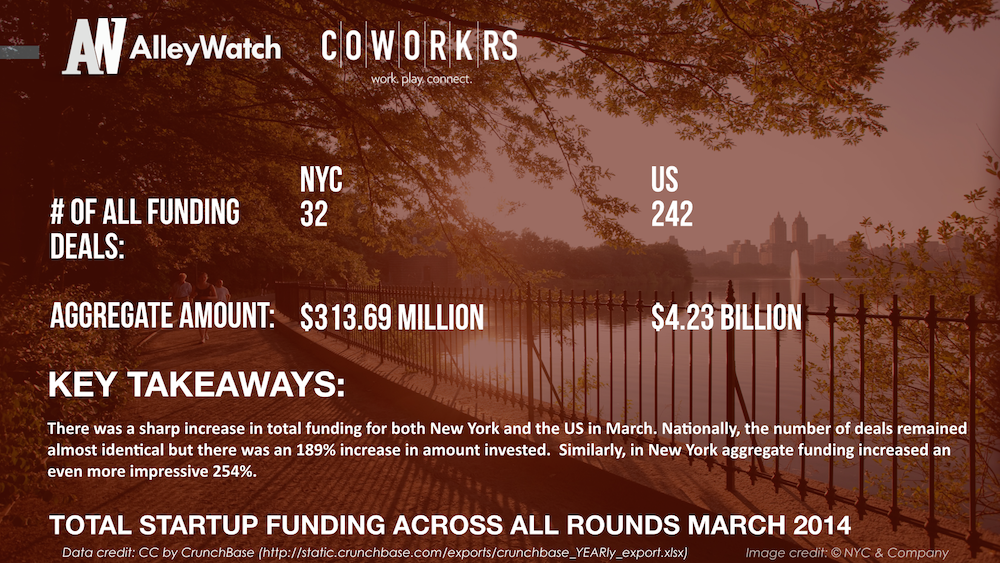
AlleyWatch, a Web site that tracks VC activity especially in New York, reports 32 deals of startup funding across all rounds in New York in March, aggregating to $314 million, a 254% increase in aggregate funding over last year. So what could a new approach for VCs be to execute strategy?
Technology's Impact on a New Approach for VCs to Execute Strategy
To be bullish on the VC industry’s momentum right now, one doesn’t have to have been among the fortunate investors in WhatsApp, whose recent sale to Facebook monetized a $19 billion valuation created by only 55 employees. Plenty of other VCs are taking advantage of the riptide of technology-facilitated innovation that is transforming industry after industry and niche after niche--across the economy.
Another spur to innovation: an advancing tsunami of mobility services and mobility-based business models are possibly even more disruptive than the Internet. This creates opportunity for entrepreneurs and their investors to redraw the map of winners and losers across many B2C and B2B markets.
Now, with the VC industry seeming to be on course to higher levels of investment spending, it is a good time to consider a change in one aspect of its investment execution model. Serving emerging growth companies and professional investors who acquire and grow such companies, Newport Board Group sees a gap in the oversight and management model that VCs deploy in the later stages of their investment cycle. This state of transition between initial growth and profitability is a kind of No Man’s Land, similar to the predictable phase of company evolution that Doug Tatum first identified in his groundbreaking book of the same name.
When Should VCs Invest?
VCs typically start to invest in early stage, high potential companies at the point where these companies have maxed out on friends/family and angel financing—and their business has become interesting to professional investors. In providing an infusion of capital sufficient to finance the company’s next level of growth, a VC is betting on a combination of founder capabilities and track record and a compelling investment hypothesis about a new technology or other significant innovation.
But what other capabilities of the founder are VCs investing in? More often it is the founders’ concept of a new product or service and their ability to create the first generation of it. When looking at the founders’ track record, VCs are trying to know how much their management skills contributed to their past success (versus their entrepreneurial/product skills). Building the infrastructure to support growth calls for management skills to develop all the functions (marketing, finance etc.) required for the business to be successful. Developing marketing strategies and managing strategic partnerships and channel and alliance partners requires attention to detail and a willingness to work through administrative complications. Above all, institutionalizing the founders’ capabilities requires the ability to manage people other than face-to-face.
VCs put a lot of faith in the oversight they exert on the company’s board—to monitor its burn rate, its progress in executing its strategy and how well its products/services are aligned with what the market is looking for. But the principals of a VC firm sitting on the company’s board may not have experience as operating executives. Even if they do, they often don’t have time to commit to assisting with management of the company. The founder/s are left more or less on their own—just as the business needs management expertise to deal with the challenges of managing growth.
The result: the company runs through its VC capital much faster than it should or misses the market opportunity.
At some point, in, say, the first three rounds of funding, a VC is likely to feel they have enough capital at risk to decide to transition the company to a professional CEO and management team. The founder typically shifts to a role like Chief Technical Officer, from which he continues to develop the technical basis of the company. But this transition may not occur before the company is swept up in struggling to get to critical mass and scale.
Our firm sees a growing number of VCs recognizing the value for their portfolio company to have affordable management advice from an experienced CEO or senior executive. Working via a month-to-month retainer, an advisor can help the company design and execute a strategic performance improvement program. We see VCs particularly receptive to this concept as they have more at stake. Advisors such as our partners, who have been CEO’s, are experienced in making key operating decisions and then living with them. They understand that when management makes decisions that don’t work they must adjust--quickly.
In the next article in this series I will profile an advisory engagement that designs and executes a program to get a VC-owned company to a private equity transaction at an attractive valuation. In the meantime, if you would like to learn more about how to finance your emerging growth company, download our ebook below on the 3 Step Strategy to Improve Profitibility.



About the Author
Jim has an extensive background as a CEO, board member, advisor and investment banker. Jim was CEO at Gist Communications where he led the firm into cloud, software and mobile products with clients including Charter Communications, Philips Electronics, and Axel Springer. As President of Torsted Advisors, a strategic and financial advisory firm, he also has experience as an entrepreneur, including as President of a company that provides products for cloud-based video conferencing management. Contact or learn more about Peter here.
 Connect with Jim on Linkedin