

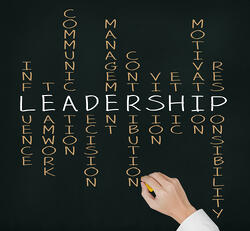
 Newport Board Group partner Art Medici was recently interviewed on two business radio shows about leadership lessons he has learned in the course of his career as an executive and entrepreneur.
In his conversations with Federal News Radio in Washington, D.C. and on the Dana Barrett show on WAFS 1190, Business Radio in Atlanta, Art explained that he and his Newport Board Group partners share a mission to advise emerging companies on how to accelerate their growth. As an advisor Art draws on his experience as a CEO of three companies: one public, one private equity-owned and one venture capital-owned. He describes the current phase of his career as a time to give back, sharing with entrepreneurs lessons he has learned from his successes—and his mistakes.
10 Leadership Lessons for Entrepreneurial CEO’s
1. Bounce Back From Rejection
Art explained that he started to get business experience at a young age, weeding gardens and mowing lawns in his neighborhood. He also sold pots and pans door to door, which gave him an early exposure to the idea that “the next ‘no’ gets you that much closer to a ‘yes’”. This early lesson in rebounding from rejection has served Art well in his business career. He sees responding to setbacks as a key “life skill.” The world is full of smart people who haven’t been able to reach their potential because they have not persisted. Taken the right way, rejection keeps us focused on what we want to do. Every “no” can be a significant growth opportunity.
2. Seize the Potential for Career Growth with Middle Market Companies
After graduating from college on a scholarship, Art spent 12 challenge-filled years with IBM. But he found that life in a big company was ultimately not for him. A key turning point in Art’s career came when he decided to leave IBM. While he was on a good career path there, he found the environment too slow moving to suit him. When he left IBM Art got involved in running smaller companies, developing teams and mentoring executives. He saw firsthand that emerging middle market companies are our country’s growth engine for jobs. Art has found it rewarding to engage with companies that are adding jobs and providing opportunities to their employees. The kinds of companies he and Newport advise are developing new technologies and expanding into new markets especially overseas. The entrepreneurial middle market of our economy is an exciting place to be right now.
3. Don’t Hesitate to Stay Small
Art’s observation is that there is nothing wrong with an entrepreneur deciding to keep his company small if it makes money and provides an attractive lifestyle for him or her. Entrepreneurs who want to take their small company to the next level of growth--where it starts to achieve scale and has a chance to generate real wealth--must be sure that they are ready for added financial risk and pressure. A high growth aspiration is not for everybody. If your intent is to pass your company on to your children or other family members, realize that only about 10% of companies are successful in doing so. Growth will enhance your chances of passing on your business as a legacy to the next generation.
4. Make Sure That Your Team Is Really Behind You
CEO’s often assume that their executive teams are aligned with them. Often they mistake top team head nodding for the kind of real, hearts-and-minds commitment required to persist in overcoming challenges to building a business. To identify and address misalignment, Newport deploys a set of tools called Inc. Navigator, which help CEO’s build consensus and make the top team accountable for results.
5. Make Tough Termination Decisions-Sooner Not Later
Art suggested a basic principle for entrepreneurs to remember: “hire slow; fire fast.” This rule is particularly important for entrepreneurs to follow when they ask themselves a hard question: are the key people who have helped get the company off the ground capable of getting it to the next stage? Loyalty can lead CEO’s to wait too long to make the hard decision to change. Art has found that for some employees the experience of being terminated is an opportunity to reevaluate their goals. In one instance he got a thank you note from a terminated employee several months later, saying that the experience had led her to understand that her interests lay in another line of work, where she achieved real success.
6. Everyone Has To Sell
It has been Art’s experience that in the best run companies everyone has a sales hat on. No one feels “above the fray” of contacting prospects, closing sales and then serving customer needs after the sale.
7. No Formal CEO Training Required
Art has advised a number of CEOs that had had no formal management training. In his experience capable CEO’s are made, not born. He feels that being a successful CEO is all about leadership. It is essential for a CEO to keep customers, employees, suppliers and others on whom the success of the company depends on board with where you are going. They must see what’s in it for them to be part of your future success.
8. Communicate, Communicate, Communicate
It is a constant challenge for a CEO to communicate with his or her executive team to reinforce the company’s strategy. Art was involved with a company that had a statement of its company strategy printed on a piece of paper that it then laminated and distributed to all employees. It proved to be an effective way to get everyone on the same page (literally!). Art commented that “egos are the biggest killers of companies.” Leaders must “walk the talk” and communicate the sincere conviction that everyone’s role is important in making the company successful.
9. Keep the Exit in Mind
Your company may have an ambitious strategy to build a great industry leader. But an exit scenario should never be totally absent from your mind. When and to whom do you want to exit and on what terms? Advice and counsel from an objective outsider can help you set goals for growth to achieve a favorable valuation and a timeline for exit, even if exit is well off in the distance.
10. Consider Creating an Advisory Board
Growing companies tend to have gaps in their expertise. An Advisory Board made up of executives and entrepreneurs who know your industry or have other relevant expertise can be a good way to fill this gap. Unlike a statutory board, an Advisory Board has no fiduciary responsibilities and the CEO is not compelled to take their advice. Members may receive a small stipend with some equity upside. Art has seen examples of how service on an Advisory Board can be quite lucrative. In the case of one Advisory Board he worked with, three members split $4 Million based on their performance and contribution to revenue growth.
Advisory Boards can also be a way to fill gaps in your company. If you cannot yet afford a CFO, having a strong CFO on your Advisory Board can identify risks and opportunities. The best advisory board members are successful business owners at the stage of their careers where they are in “give back mode.” They want to work with CEO’s who will listen to and act on their advice, especially when they tell the CEO that they think he or she is wrong.
Hosts of both radio shows spoke warmly of the value of Art’s remarks to their audience of entrepreneurs. You can contact Art at Art.Medici@NewportBoardGroup.com


About the Author
Art Medici has a diverse background as an executive leader in e-commerce, high tech, telecom and information companies. His experience spans startups, high growth small/mid cap firms and global leaders like Thomson Reuters. Contact Art here.
 Connect with Art on LinkedIn

