

 In earlier blog articles I have looked at issues confronting earlier stage and middle market companies as they traverse what Doug Tatum, our firm’s Chairman, called in his book of the same name: “No Man’s Land.” This is the phase of corporate evolution in which companies are too big to be small and too small to be big.
I have already examined how specific companies encountered issues related to the role of what Doug calls the Four Ms. The first three I have considered are Market, Model and Money. Now I would like to address the final M: Management.
Why Management is a Key Ingredient for Next Level of Growth
I have saved this for last, as issues related to Management confront Founders/ CEOs with some of the most intractable problems they must solve if they are to get the company to its next level of growth. Management is the platform to integrate Market, Model and Money into a formula for success.
Fortunately, No Man’s Land suggests a few rules to help companies navigate their transition from being dependent on their founder’s personal capabilities to institutionalizing those capabilities. The first rule is that to navigate successfully the Founder/CEO must hire at the top first, not the middle. The second is that as the company professionalizes its management and pushes for change, it must be extremely mindful to preserve its entrepreneurial culture.
As an example, let us take a look at an industrial company I joined after its founder had lost control to private equity. The private equity group’s first step was to fire the CEO, CFO and VP’s of Operations and Development. In the chaos that unfolded the marketplace for the company contracted and new product development ground to a halt. Warring factions of management and employees faced off and there was a lot of strife.
Ultimately, after a protracted period of time, the private equity owners brought the CEO and VP of Development back to the company. In doing so they acknowledged the need to restore the company’s culture—the vision, innovation and risk taking that were necessary to energize its employees and home in on market needs. Bankruptcy was averted by a new infusion of funds. The company went on to achieve substantial profit levels and was sold, generating a hefty return for the investors.
What did I learn from this experience? Hiring at the top was a necessary but not sufficient requirement to getting the company to achieve its potential. Wholesale changes to the management team without any concern for the culture of the company were a big mistake. Bringing back some of the executives previously terminated suggested that the private equity owners had acknowledged past errors in how it carried out and communicated changes in management.
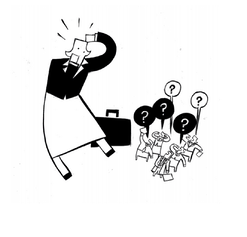
A second case study from my personal experience involves another money losing company, an industrial firm more than $200 million in revenues and 10 operating plants. I joined as CFO and became ultimately the EVP. The company had to make a transition to higher levels of profitability. The CEO and Head of Operations were replaced and the company was managed by division heads at the transaction level. These business heads were the face of the businesses to customers and employees. The new top management re-energized them, with a focus on profitable sales and marketing. Procurement and manufacturing segments were transitioned to a sourcing group. The culture of the company was changed, but the change was executed by key personnel who represented the original organization. There was little of the factionalism described in the first case study. The business was being run by long time players steeped in the culture of the organization, but now directed to manage in a different way.
 So have we identified a “magic rule” for success in changing management to achieve a transition to higher profit levels? No. We have determined several pitfalls to avoid: not being mindful of culture and not changing at the top first. As companies professionalize management they must take the time and effort to align the new executives with the company. If the team doesn’t know the strategic framework within which to make day to day decisions, the company will not unlock its sales, margins and earning potential.
There are a number of organizations including my own that can assess the various ways that an organization can become misaligned. There is substantial misalignment in most companies we have worked with and it hinders their transition to full earning potential. Managing personnel change is necessary but it definitely is not sufficient to achieve higher and lasting profitability. Management and employees must work together in alignment around their shared goals and the path to achieving them.

About the Author
Peter Duff is a versatile operating executive with a long record of accomplishments running a wide range of companies. As an EVP, COO and CFO, he has been responsible for significant improvements achieved in revenue, margins, expense and cash levels. Contact or learn more about Peter here. Connect with Peter on LinkedIn
