

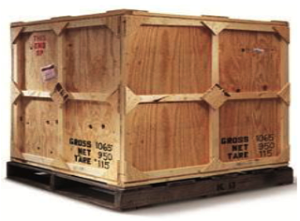
 In a prior blog post, we looked at 10 areas your business could save money. We looked at four of them in a little more depth: legal, banking, insurance, and audit expense reductions. Now we turn our focus to freight costs. The term “freight” includes a wide variety of costs: inbound and outbound, domestic and international, and all sizes of shipments that your company sends--from an envelope to a full container.
Reducing Your Company's Freight Costs
Let’s examine reducing freight costs, both inside and outside the corporation.
Inside the corporation
One approach is to look at the company’s operating data and service requirements as an opportunity for a re-engineering analysis.
What do we mean by that?
Let me give you an example. You ship 10 truckloads every Monday to a plant in New England from Los Angeles. If all trailers do not have to reach the destination simultaneously (and realistically five of those 10 might be within service requirements if they arrived a few days after the initial five) then why not consider rail transportation for the latter five? This could save you about 20% of the line haul cost while taking three extra days in transit.
If you are a manufacturing company, you have likely invested in complex supply chain systems. You’ve tried to minimize your investment in inventory and manage the risk of obsolescence and slow-moving product. These are important goals and any changes to systems designed to achieve them need to be carefully thought through. Still, sacrificing a certain amount of supply chain flexibility by requiring full truck loads to bring in raw material can save companies a lot of money. It is worth checking whether you are managing that process by using full truck loads for inbound product.
If it is not workable to use full truck loads, consider increasing the density of the load on the truck. Pricing decreases with increased density. Modeling what would happen to inventories if you insisted on full truck loads or increased density loads can give you an idea of the possible net savings. Even a minor change here can save a lot of money. If you are stuck with road, consider live loads versus dropped trailers
Let’s not forget the unnecessary cost incurred when a company sends all small packages with expedited shipping. While it frequently makes sense to expedite replacement parts to customers, it doesn’t always make sense to do so for general office communications. If everything is sent by two day air for parts and communications you know you are wasting money!"
Outside the corporation
Most companies find that freight costs and service criteria are a key source of savings potential. Manufacturing companies and retailers see the value of periodically issuing RFPs to get rate quotes and benchmarking the rates you are paying. Freight expense represents a significant percentage of revenue, and freight savings are a real mover of profits. They can be vital for corporate performance improvement.
If your line of business or company is part of a larger group, see if you can piggyback on another company’s discount program. Consider combining your freight program with those of others in your group to improve your chances to get higher discounts.
Outbound shipping is something to look at from a few perspectives. If you are shipping bulk product, are you shipping the full truck loads discussed above? Have you established realistic minimum values for shipping to customers? Do these minimums need to be updated? Does a service charge need to be initiated or increased?
The goal here is to manage customers’ behavior so they order from you in an efficient way. For those that do not, a realistic service charge can help defray the extra expense you incur. Also, take a look at how much you uplift the shipping charge when you pay the shipping bill, and recover the uplifted shipping charge from the customer. It may be appropriate to increase that freight charge if you are giving away all your discounts.
In most companies, inbound is your expense, as the supplier sells ex-works. Do not fall into the trap of thinking that because you sell ex-works, the freight to customers should be considered totally the customers’ expense. The total cost of acquiring your product, including the delivery charge, is how a customer evaluates your product versus other competitors. Managing your profitability as well as your customer’s full acquisition cost is the way to think about it.
Proactive management of freight cost can be an effective way to add dollars to your bottom line while maintaining good relationships with customers and freight suppliers.

About the Author
Peter Duff is a versatile operating executive with a long record of accomplishments running a wide range of companies. As an EVP, COO and CFO, he has been responsible for significant improvements achieved in revenue, margins, expense and cash levels. Contact or learn more about Peter here. Connect with Peter on LinkedIn
