

A main need of companies in No Man’s Land is to build an experienced management team that can take the business where it needs to go. An entrepreneur must create and delegate to a high functioning management team responsibility to build processes, systems and culture to drive growth toward scale. We asked Newport partners to draw on their experience as CEOs and senior executives: what are successful practices you have seen (and what are pitfalls to be avoided) in defining executive roles and then selecting, onboarding, incentivizing, overseeing and rewarding members of the top team?
 Kim Denney
Kim Denney is an experienced Houston area leader with a record of solving top-level problems as an executive with broad responsibilities in the Chemical, Petrochemical, Energy, and Manufacturing industries.
"The biggest issues I see are often in the recruiting process. Too many companies fail to clearly articulate the job description for the role. How can you hire someone if you are not on the same page regarding exactly what skills you would value? The interview process is often not planned up front or based on training in behavioral based Interview techniques - so that everyone is focused on cultural fit. After all, it's HOW you achieve results that counts. Not every candidate's approach will fit within the culture the business has worked so hard to build. The most valuable lesson that experience in this area has taught me is that, if you do bring on someone who proves to be the wrong person, act quickly to replace them and get your leadership team re-aligned."
 Jack Donahue
Jack is a strategic CFO with experience in public and private companies, generally high growth and acquisition-oriented. He has experience with private equity as CFO of portfolio companies and as an operating partner including helping to drive exits.
"Companies at virtually all stages on the growth curve require experienced resources in the form of a senior management team to develop and implement strategy and direction. Without such management resources, you may not seize your company’s opportunity—or get a second chance. The best option from a cost benefit standpoint is to hire the experience you need most by retaining a fractional executive(s). Their experience can be invaluable. A benefit to this approach is that fractional executives can easily move into full-time executive positions, with their learning curve behind them."

Tom Henricks began his four decades in aerospace as a fighter test pilot in the U.S. Air Force before being selected by NASA to become an astronaut. He received worldwide recognition on four Space Shuttle missions and commanded two of those flights.
"In my view, the most important best practice in building a management team and designing and filling management roles is to address fit with the culture. Give this intense consideration and get advice from board members, advisors or confidants. The biggest pitfall is that the founder is unprepared to let go, even after he or she has given themselves and their colleagues assurances to the contrary."
 Susan Kearney
Susan is a multidimensional senior operating executive who has generated impressive results across the technology, education, B2B, B2C and social sectors in organizations ranging from start-ups to well established entities. Her approach focuses on engaging stakeholders and building consensus to develop and deploy aggressive sales and marketing strategies, customer retention initiatives and digital solutions.
"Designing executive roles well is as important as filling them with the best candidates. Too often when business owners design roles they simply replicate organizations they have worked in previously. Depending on the company's stage of development there may be better alternatives to the usual functional structure that calls for a head of marketing, human resources etc. Will a customer-centric approach work best at this point in your company's evolution? What about an industry orientation or a 'three-legged stool' i.e. put an executive in charge of each of the following: product, customer and everything else? What roles can/should the CEO keep and which should she delegate? Finally, how many executives can you really afford given your resources?"

 David Roberts
David brings to Newport an extensive background as a business strategist, advisor, entrepreneur and CEO. He is a highly experienced management consultant who served with Bain and Company as a Vice President and Partner for 14 years.
"I agree that this is the biggest challenge that emerging growth companies face: how to professionalize management, especially when the founder/entrepreneur is relatively inexperienced in selecting senior level people.
Several issues:
1) The most common challenge how to bring in new talent from outside (over the heads of internal/loyal people) without losing existing staff.
2) You may need to raise compensation levels--above the levels of current staff--in order to attract higher level, more experienced talent.
3) You may lack experience in recruiting and evaluating candidates—while the need to fill the position may be urgent.
The number of bad hires in critical positions in emerging growth companies that I have seen is very troubling. Not only is it financially costly to bring in and then terminate a bad hire. An unfilled or badly filled position means you incur a heavy opportunity cost in the form of an unproductive search/hire/onboard/ integrate/ terminate cycle.
A professional, experienced board can be very helpful in this situation. Their role--in reviewing and rewriting position descriptions, recommending and interviewing search firms/agents, interviewing candidates, advising on compensation, checking in with new hires after a few weeks on the job—can be invaluable.
Another best practice is to bring in new people as consultants or interim executives and work with them for 90 days before offering them the permanent position. This has the obvious benefit of making sure that the new person can work well with the leadership team. It has the added benefit of allowing the new person to work with the staff and earn their respect--making hiring and integration less abrupt and disruptive."
 Mark Rosenman
Mark is a co-founder of Newport Board Group and its Chief Knowledge Officer. He specializes in content management, inbound marketing and thought leadership authoring.
"The most important step in starting to build a management team is for the founder to be ruthlessly honest with him/herself about where the business is. What is its current situation and its most important needs? How will the executive/s you bring in cope with the built-in constraints your company faces? I have seen companies bring in CEOs or other executives based on their resume and a hope that the new team will transform the company simply based on what they have done elsewhere. This fantasy leads to disappointment. The problem is that performance is largely context-specific. What someone achieved in a different environment than yours may not be feasible in your company right now. Bring in people who can help your company advance by hitting singles and doubles, not someone who you are counting on to hit a home run. "
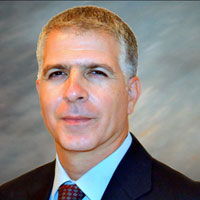 Eran Tagor
Eran has diverse experience in executive management, venture capital, private equity and M&A, including turnaround, restructuring and special situation transactions.
"When an entrepreneur is expanding the management team, he or she needs to define the responsibilities and accountabilities for each prospective position. Think of this as a kind of wish list. It is important for the entrepreneur who designs her management positions to include what she has decided she isn’t good at or doesn’t like to do. Getting insights from an objective outside advisor can be helpful in this exercise.
Once a candidate has progressed past initial screening, I would suggest that they be interviewed by members of the management team and by selected board members. Having one or more people who would ultimately report to them interview them can provide a different perspective than you’ll get from members of the management team. The goal should be not just to evaluate the candidate. You want him or her to understand the scope of the role, the state of company operations and to set realistic expectations.
Once the candidate is hired and onboarding is complete, you should ask the new executive to submit a plan, together with metrics and goals. Formal goals should be set and signed off. If there is an incentive plan its assumptions and terms should be thoroughly discussed. Misunderstandings in this area can be damaging.
Then the main challenge for the entrepreneur is to let the new member of the management team execute. Empower him or her and avoid undue intervention and micro management. Let him execute his plan until the first mutually agreed to milestone for achieving results is reached. If the milestone is not achieved, dive in to assess what went wrong and then decide if a mid-course correction is needed."
What other steps are you taking to grow your business? Share your ideas with us below, and don't forget to download our free checklist "The Fractional CMO Readiness Checklist."

