 Every entrepreneur looking for investors would like to find backers who have ample cash to invest and who also bring industry knowledge, savvy and contacts. But most entrepreneurs would prefer that their investors be relatively hands off, not inclined to interfere unduly in their business management process. How realistic is it to find such investors?

Jeff Cornish has a history of providing strong leadership as a CEO and President of fast growing and successful companies.
His experience spans industries as diverse as transportation, retailing and restaurants. As President and CEO of Performance Transportation Services (PTS), Jeff led a company with the second largest market share among vehicle delivery companies.
"The best way to raise capital without having to constantly deal with investor feedback is to have a lot of investors put in small amounts. The problem is that this approach often takes more effort than finding a few. Sometimes you can find them, but the norm is that people putting in money expect to have a voice."
 Michael Evans
As a partner with Ernst & Young, Mike developed, led and drove significant growth in a number of practices.
He created, grew and led, as Global Director, the firm’s Real Estate and Construction Industry practice from 1988 to 1998, managing 2,500 professionals and personally serving many of the largest international real estate organizations in the U.S. and around the world.
"If your company has a really "big idea" or value proposition and represents a paradigm shift in your industry, investors can be "convinced" to get in on the opportunity without playing an active oversight role. But for the typical company, significant investors will want a board seat. The good news is that most investors you want do not have the time to be very hands on. So unless the investment is material to their portfolio or net worth, most will be hands off and will defer to management."
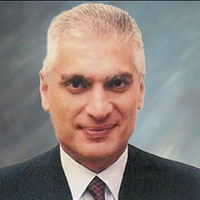 Ferey Faridian
Ferey is a senior strategic investment professional with 25 years of experience spanning management consulting in 12 countries, investment banking and principal investing, as well as serving as CEO/President of high-technology ventures.
"The concept of quantity of money is easier to grasp than quality of money. The right investor can be a boost to the company well beyond the value of the cash invested. By the same token, the wrong investor, particularly one on the Board, can be the death of the company. It is always wise to have independent Directors in place before allowing a new investor to take a seat on the Board."
 Bill Heermann
Bill has deep expertise in building and running industrial manufacturing and construction companies.Most recently he was President of Precision Industrial Contractors, which serves the industrial construction market.
"The realism of finding the perfect investor is proportional to the effort expended during the search."
 Tom Henricks
Tom Henricks began his four decades in aerospace as a fighter test pilot in the U.S. Air Force before being selected by NASA to become an astronaut. After leaving NASA, Tom has held a series of senior level positions in the aviation industry.
"Hoping to find investors who won’t want to oversee the progress of their investments is not very realistic."
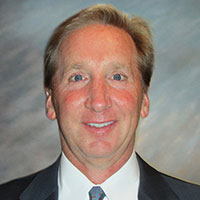 Kevin McGonigle
Kevin's professional experience has focused on helping mid-market and large corporate clients to address their most critical business issues. He is a seasoned executive and advisor who helps C-suite executives tackle key strategic, operational, financial, and human capital challenges.
"Most investors are protective of their investment and proud of their expertise. They will make sure that others leverage their money and insights to the maximum extent, which means they must remain close to how the entrepreneurs they invest in are executing their business growth plan. The person/investor/expert who has built up an enviable contact list, content knowledge, and market savvy will usually want to safeguard these valuable personal assets. A lifetime of work can be undermined quickly if they let others run astray with their name, capital, or ideas."
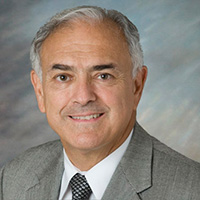 Art Medici
Art Medici has a diverse background as an executive leader in e-commerce, high tech, telecom and information companies. His experience spans startups, high growth small/mid cap firms and global leaders like Thomson Reuters.
"It depends. Investors who are hands-off in the beginning will become quickly involved if milestones are not met and performance lags. Once an investor loses confidence in an operator, life becomes more difficult for both. VCs are less likely to become involved in management than angel investors."
.jpg?width=150&name=otto_billie-46_200x200_(2).jpg "billie otto") Billie Otto
Billie OttoBillie was until recently Executive VP and CIO of TrueBlue Inc. (NYSE: TBI) the largest industrial staffing firm in the U.S. The company has nearly $2 billion in revenue, serves approximately 130,000 customers and deploys more than 375,000 temporary associates.
"Given a talented entrepreneur, there will almost always be some investors willing to put up a nominal amount - usually in the finite friends and family space. To engage and attract deeper pockets takes a team and a unique level of energy and patience. I've seen this done successfully in situations where co-founders have complementary skills and a disciplined approach. They must have very tough skin, the ability to know when and how to recharge their batteries. The rare successful ones have a good bit of luck along the way."
 Ted Parrish
Ted Parrish has a strong background as both an operating executive and an advisor. He brings to Newport extensive background in financial services strategy and operations.
"Entrepreneurs need to make a decision on how much involvement is helpful and how much they are willing to tolerate. The answers to these questions are frequently conflicting with their need for capital."
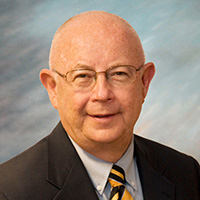 Doug Payne
Doug Payne is an experienced executive leader and Board member with a successful track record of building growing profitable companies.
"Investors may be satisfied to let management use their capital and measure results over a reasonable time frame. But at the end of the day, non-performance will lead to investors requiring change
 Mark Rosenman
Mark is a co-founder of Newport Board Group and its Chief Knowledge Officer. Serving as the Chief Knowledge Officer at Tatum, he successfully drove strategies to develop, capture, share and deploy the knowledge and experience of the firm's professionals.
"Entrepreneurs should try to get their capital from investors whose help they actually want- to help guide the company’s strategy, understand changes in its market, spot opportunities and make contacts. A lot of successful people who have money to invest get satisfaction from mentoring entrepreneurs. Setting expectations about how much mentoring your investors will give you and whether you will ultimately be able to make the key decisions must be part of a frank fund raising conversation."
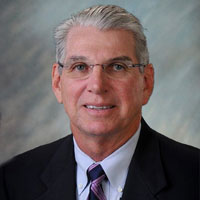 Mike Sanna
As a senior executive in the technology and semiconductor industries, Mike has significant accomplishments in marketing, engineering, operations and general management. He has a strong track record in such key areas as developing and executing rolling multiyear market and product strategies and leading intercompany development teams to create unique solutions.
"This depends on many factors. First is the riskiness of the endeavor. Someone designing a revolutionary product or technology is far riskier and more likely to encounter surprises that set back the business plan than someone opening a new restaurant. Second is the experience level of those directly involved with running the business. A serial entrepreneur who has successfully built and sold a number of start-ups will have much less involvement by investors than an engineer who leaves an established company to try to build a new company based on innovative technology. The design of a term sheet depends on these and many other factors. Funding level versus potential payoff versus risk is what makes an investment more or less attractive to prospective investors. It is the relative attractiveness of the investment that determines who can define the terms of the agreement and that is where the level of oversight is defined. It is usually also very dependent upon how well the startup is doing versus its plan. If it is on plan, investors will have less input than if it is veering off plan and incurring a need for additional funding. It is often first time entrepreneurs who find themselves straying from the plan and getting unwanted help from their investors. Too many entrepreneurs see getting advice from their investors as a waste of their valuable time. In fact it can point their company on the path to success."
 John Sullivan
John has delivered top- and bottom-line results running a wide range of companies and dealing with challenges like acquisitions, lean manufacturing, supply chain optimization/low cost sourcing, new product development and brand and channel management.
"Pretty unrealistic to expect an investor to be hands off--unless the company is able to raise small investments from numerous investors online. As the amount invested by an individual or group increases so will their desire to exercise some oversight."
 Eran Tagor
Eran has diverse experience in executive management, venture capital, private equity and M&A, including turnaround, restructuring and special situation transactions.
"The reality is that most investors want to monitor and protect their investment. When a group of investors puts money into a company, most will be passive, leaving it to one to represent the others. Another factor in determining the extent of investor participation is how much money they put in and what rights they have. An entrepreneur who is considering an investor should do their own due diligence with other companies the investor has been involved in. Investors vary widely as to how much they expect to participate (or interfere) in management of the companies they back."
Have you been struggling to find the right investor for your business? Share your thoughts with us below, and don't forget to download our free guide "Business Growth Challenges Defined: You May Be In No Man's Land."